
Amateur radio logbook · Windows · Raspberry Pi · macOS
LogRunner
Logbook and station hub for amateur radio
Logging, rig control, waterfall, audio, DX cluster and contesting, all in one program. Use it in the shack, out portable and on contest weekends. It also runs stations with several screens and PCs.

Why LogRunner
Your log. Your rig. Directly connected.
Unique feature
Icom CI-V (IP), built in natively
LogRunner speaks Icom’s network protocol itself. You need no RS-BA1, no wfview, no virtual COM port and no other middleware. Icom transceivers with LAN or Wi-Fi, such as the IC-7300MK2 and IC-705, connect fully over the network.
- Control: frequency, mode, PTT, control bar, meters and band keys
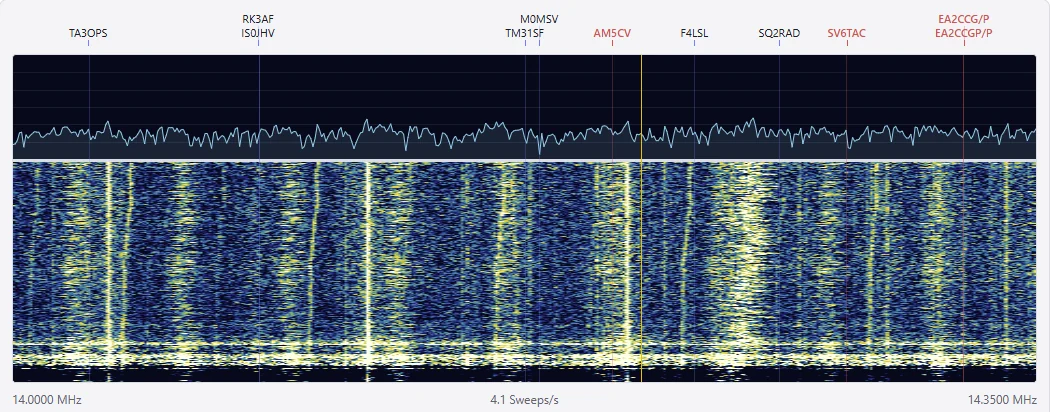
- Waterfall: smooth over the network at about 30 sweeps/s
- Audio: listen and talk via NetAudio, sound card or mixer
- WSJT-X: tunes the rig through LogRunner and switches PTT
Your log, your data
The whole log lives in one SQLite file and works without internet. To back it up, just copy the folder.
Wavelog-compatible
LogRunner uses the same field layout as Wavelog and ADIF throughout. You can sync with Wavelog/Cloudlog, QRZ.com and LoTW.
Shack, portable & contest
The contest line warns about dupes and writes Cabrillo. LiveLocal and LiveNet let you work across several screens and PCs.
20+
Built-in tools
from DX cluster to rotator control
3
Rig interfaces
CI-V · Hamlib · Omnirig
3
Online logs
Wavelog · QRZ.com · LoTW
3
Platforms
Windows · Pi · macOS
6
Languages
switchable without restart
Features
Everything your station needs
QSO entry
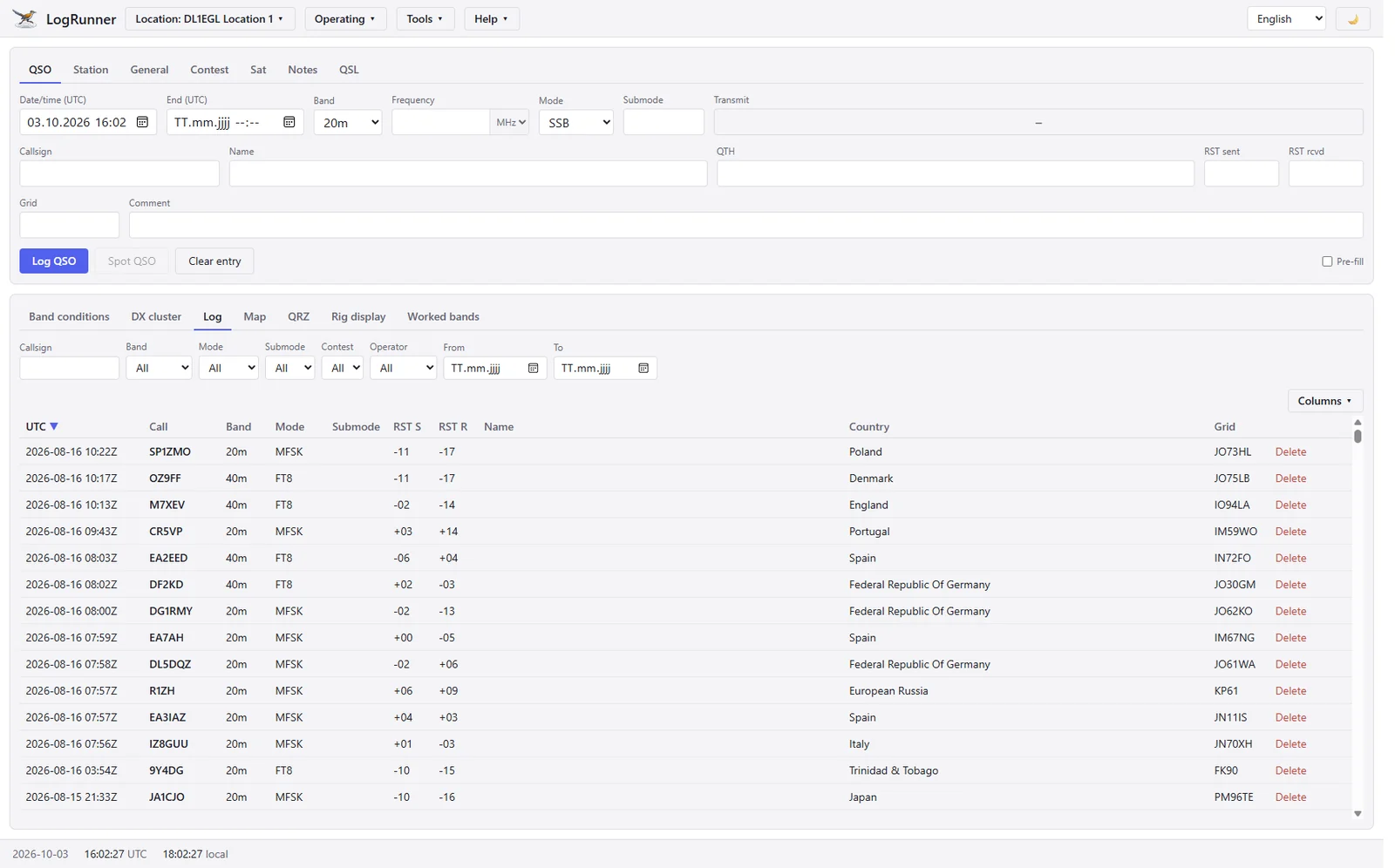
The entry form works like Wavelog. LogRunner fills in country, zones and DXCC for you.
Log table
Search, filter and sort by any column. You decide which of the 81 columns to show.
Bands & statistics
Band matrix per callsign plus analysis by band, mode, continent and year.
Offline world map
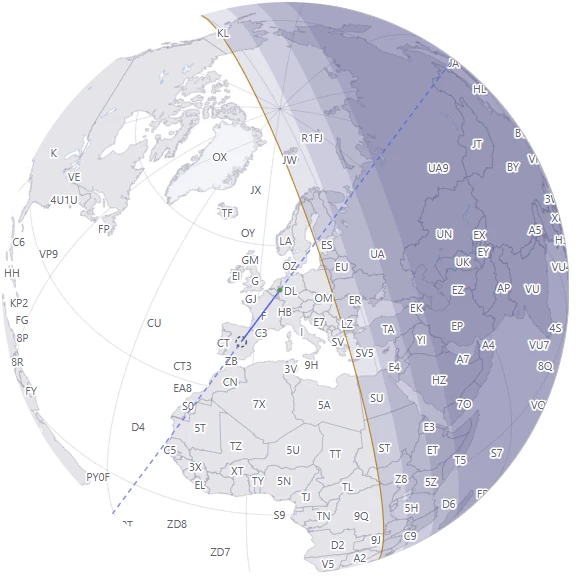
Flat, globe or azimuthal. Add grey line, prefixes, zones, locator grid and spots on top.
DX cluster
Via telnet with table, band map, statistics, wildcard filters and alerts with custom sounds.
Rig control
Icom CI-V by cable or natively over IP, plus Hamlib and Omnirig. The waterfall comes from the Icom band scope.
Audio routing
A mixer for sound cards and NetAudio per transceiver, with voice EQ and QSO recording.
WSJT-X import
Whatever you log in WSJT-X shows up in the logbook seconds later.
LiveNet & LiveLocal
Several PCs on the LAN or extra windows on the same PC. Multi-operator setups work too.
ADIF & sync
Tolerant ADIF import and export with duplicate detection. Plus sync with Wavelog, QRZ.com and LoTW.
POTA · SOTA · IOTA
Search the lists offline. Super Check Partial suggests matching callsigns.
TRX display
An HDMI capture card brings the rig’s display to your screen, and onto the network if you like.
New possibilities
Rig network
Several transceivers on one or more PCs work together as one station.
Band assignment
Assign a transceiver to each amateur band. It can sit on the same PC or on another computer in the LiveNet. Click a DX spot and the rig in charge of that band tunes to it.
SyncVFO
Tune one or more Icom transceivers in sync. All rigs in a group follow the leading rig, so you hear one station on several antennas at the same time.
Platforms
From Windows PC to Raspberry Pi
Windows 10/11
Installer, optionally without admin rights.
Updates simply install on top.
Raspberry Pi
64-bit ARM, installed by script.
Tested on Pi 5 with Raspberry Pi OS (Debian 13).
macOS 13+
Macs with Apple silicon (M1 and later).
Tested on Mac mini M2 with macOS 14.
Other Linux
Run from source (Python 3.11+).
Measured on a Pi 5 with IC-7300MK2: status query in 3.7 ms, waterfall over USB at 3.3 sweeps/s without dropouts.
Beta 0.9.6b63 is for testing. Don’t rely on it for the contest weekend right after. Please test transmit features into a dummy load first. Updates never touch the data folder ~/LogRunner with your logbook.
Download
The current beta is under “Releases”, together with a detailed manual.
Propagation figures: N0NBH / hamqsl.com. MUF contours: prop.kc2g.com (KC2G). Country file cty.dat: Jim Reisert AD1C. Map data: Natural Earth. Place names: GeoNames (CC BY 4.0).